Property managers navigating the 2026 rental market are facing a tighter operating environment than any point in recent memory. Costs are up. Tenant expectations have risen sharply. And the lease-up process, from digital rental application to signed lease, has become a critical competitive advantage for portfolios that want to minimize vacancy and maximize retention. Industry data reveals just how much the landscape has shifted and what the most effective property managers are doing about it.

Cost pressure is the defining story of the 2026 rental market. 74% of independent landlords saw property ownership costs rise this year, driven primarily by taxes and insurance. That finding tracks closely with Baselane's data: 82% of rental property owners reported increased costs of ownership in 2024, and 26% said those costs rose by more than 20%.
The categories hitting hardest: property taxes (60% of owners affected), maintenance and repair costs (57%), utilities (49%), and insurance premiums (43%). Average annual maintenance costs for a single-family home now exceed $10,000.
According to the Hemlane 2026 Rental Owner Report, rising expenses were named the top concern by 55% of respondents, outpacing every other issue including vacancy rates, interest rates, and regulatory changes.
The concern is not whether units will rent. It is whether the numbers still work after expenses keep climbing.
Despite this pressure, many landlords are absorbing costs rather than passing them along. 18% of landlords surveyed by Avail have committed to a no-increase rent policy, prioritizing tenant stability over short-term margin gains. This makes operational efficiency, not rent hikes, the primary lever for protecting returns.
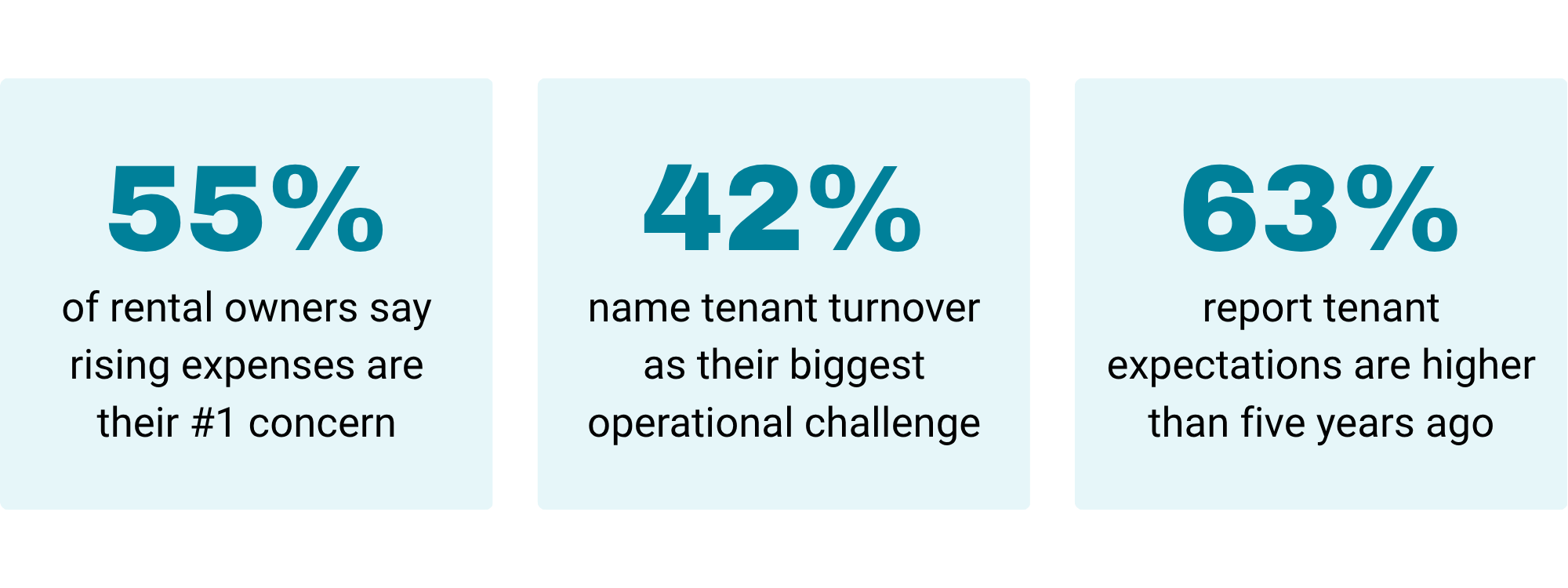
If rising costs define the financial picture, tenant turnover defines the operational one. 42% of rental owners identified tenant turnover as their single biggest current challenge, well ahead of maintenance costs (29%), rental pricing (13%), and legal compliance (8%).
Every move-out creates a cascade of expenses: lost rent during vacancy, cleaning and make-ready costs, listing and marketing fees, time spent screening applicants, and the risk of a slow lease-up in competitive markets. For smaller portfolios, a single prolonged vacancy can meaningfully disrupt monthly cash flow.
"Tenant satisfaction matters more than ever. Better communication, faster maintenance, and a smoother digital rental experience are not nice-to-haves. They reduce the very challenge owners say hurts them most."
The data also shows that longer tenancies are becoming the norm. 36% of landlords report tenants staying longer than in previous years, nearly five times the number reporting shorter stays. As homeownership becomes less accessible, rental units are increasingly serving as long-term homes, which raises the stakes for quality tenant relationships and fast, effective lease-ups when units do turn.
Tenant expectations have fundamentally shifted. 63% of rental owners and managers report that tenant expectations are higher today than five years ago, with 39% describing the increase as significant.
Today's renters expect clean move-ins, responsive communication, transparent processes, and convenient digital experiences throughout the entire leasing journey. That includes online rental applications, digital tenant screening, and e-signed leases. Properties that still rely on paper applications or manual screening processes face a real competitive disadvantage in attracting qualified tenants quickly.
The property management industry is catching up. 65% of landlords now use digital tools for tenant screening, and 75% are either using or open to AI for tasks like drafting lease language, navigating compliance questions, and writing property listings. The new wave of property managers, with 47% managing properties for three years or less, is especially reliant on digital tools to close the experience gap.
Still, adoption is uneven. 35% of landlords cite cost as the biggest barrier to adopting new property management technology. That gap creates an opening for property managers who find affordable, streamlined tools that accelerate lease-up without adding overhead.
The most effective operators in 2026 are making decisions based on market data, not gut instinct. Nearly 74% of rental owners use market data to guide rent increase decisions, far outpacing those who rely on fixed annual increases or operating cost changes alone.
On the growth side, the market remains active despite the pressures. Nearly 1 in 3 landlords plan to expand their portfolios in the next 24 months. But the mindset driving that growth is disciplined: 65% of owners describe their current approach as focused on long-term consistency rather than aggressive acquisition.
More than 80% of rental owners describe themselves as neutral to optimistic about today's rental market. That optimism is earned through operational discipline: tightening vacancy windows, improving the tenant application experience, and using better screening to place qualified renters faster.


